Abdominal
The largest pair — middle of the belly. Where you'll see the male's concave dish most clearly.
Field guide
Everything we keep coming back to while raising Shelldon — sex differences, the world's species, what a tortoise looks like underneath, and how to read what a shell is telling you.
Tortoise sex is read from the back end of the animal, not the head. None of these signs are reliable in hatchlings — you usually need a juvenile that's been growing steadily for a few years before the differences are obvious.
| Trait | Male | Female |
|---|---|---|
| Plastron (underside) | Concave — scooped inward so he can sit on top of the female during mating. | Flat or slightly convex — gives more room for carrying eggs. |
| Tail | Long, thick, often tucked sideways under the shell. Vent (cloaca) sits past the edge of the carapace. | Short and stubby. Vent sits at or inside the edge of the carapace. |
| Anal scutes | Wider V-shaped notch at the back of the plastron to let the tail swing. | Narrower, more closed notch. |
| Size | Smaller in most species (yellow-foot, red-foot, Russian, Greek). | Larger overall in those same species — opposite of Sulcatas and leopards, where males are bigger. |
| Behavior | More territorial. Head-bobs, ramming, mounting attempts once mature. | Generally calmer; digs nesting pits when gravid. |
| Reliable age to sex | Usually 4–6 years / palm-sized; earlier in fast growers. | Same window — hatchlings cannot be reliably sexed by eye. |
Note on temperature-dependent sex: in most tortoises, incubation temperature decides the hatchling's sex. Warmer eggs (~31–32 °C) usually produce females; cooler eggs (~27–28 °C) usually produce males.
There are roughly 50 recognized tortoise species spread across every continent except Australia and Antarctica. These are the ones you're most likely to read about — wild, in captivity, or in conservation news.
 Wikimedia Commons
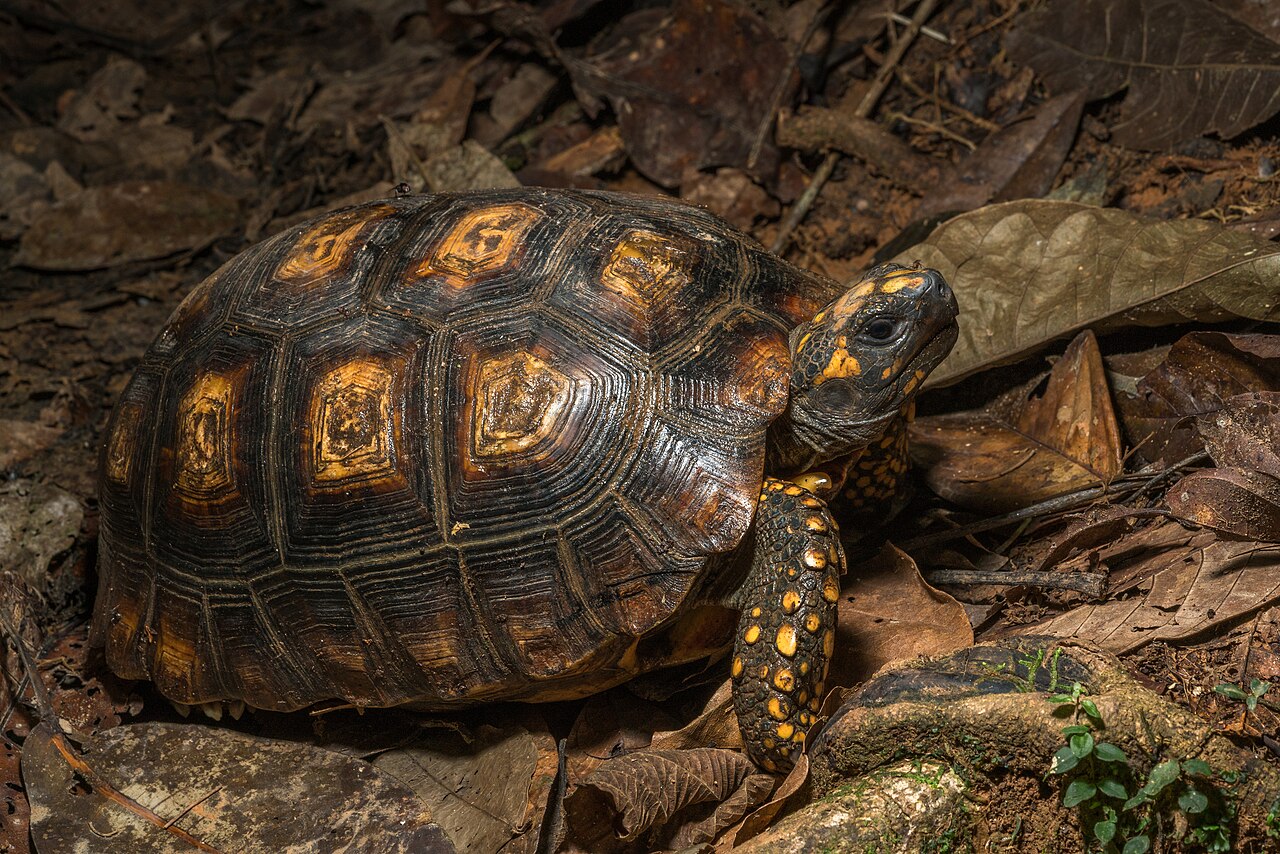
Amazon basin — Brazil, Peru, Colombia, the Guianas, Venezuela
Size: 16–24" carapace, 30–60 lb
Rainforest tortoise. Loves humidity, eats more fruit and mushrooms than most tortoises, and will eat carrion and slow-moving invertebrates. Shelldon's species.
Learn more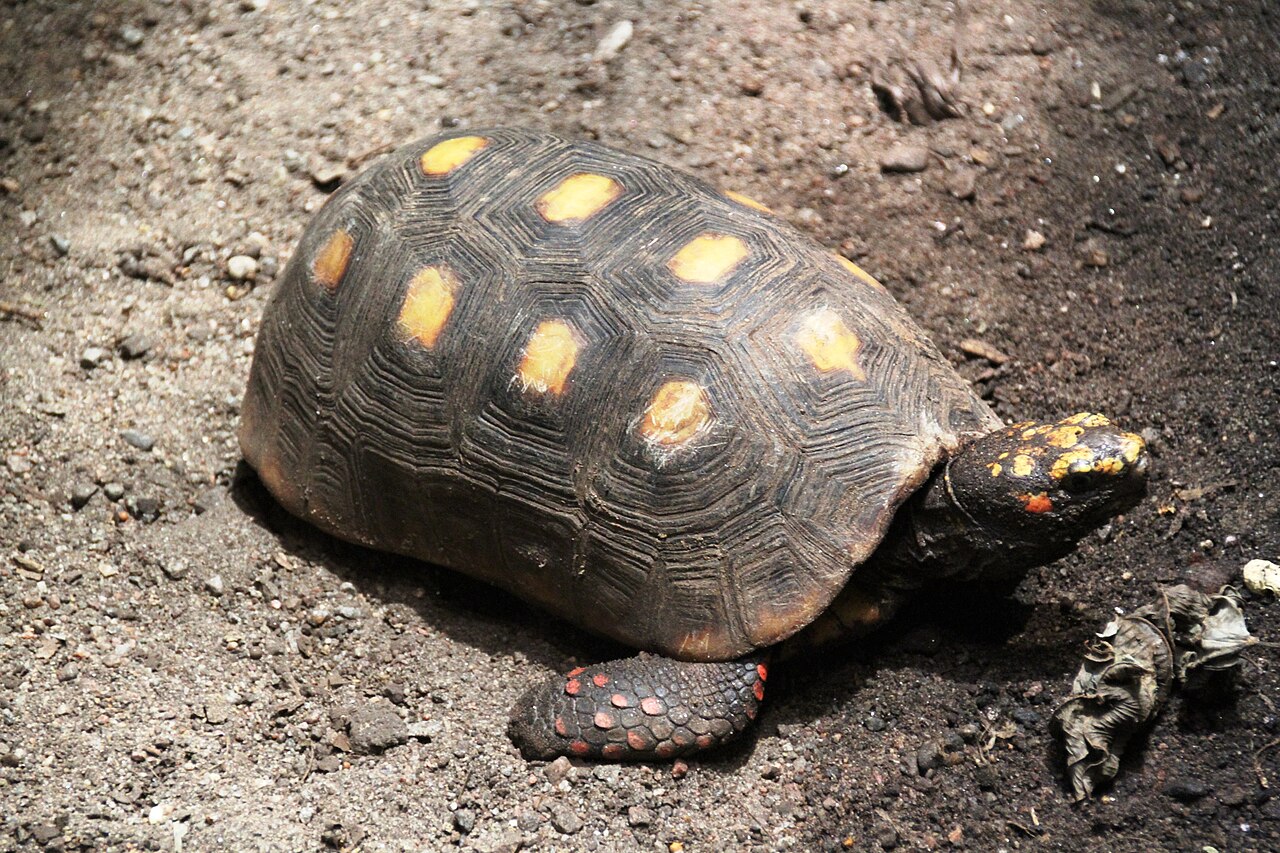 Wikimedia Commons
Northern South America & southern Central America — savanna edges and dry forest
Size: 11–14" carapace, 20–30 lb
Closest cousin to the yellow-foot but smaller, more colorful (bright red scales on legs/head), and more tolerant of drier conditions.
Learn more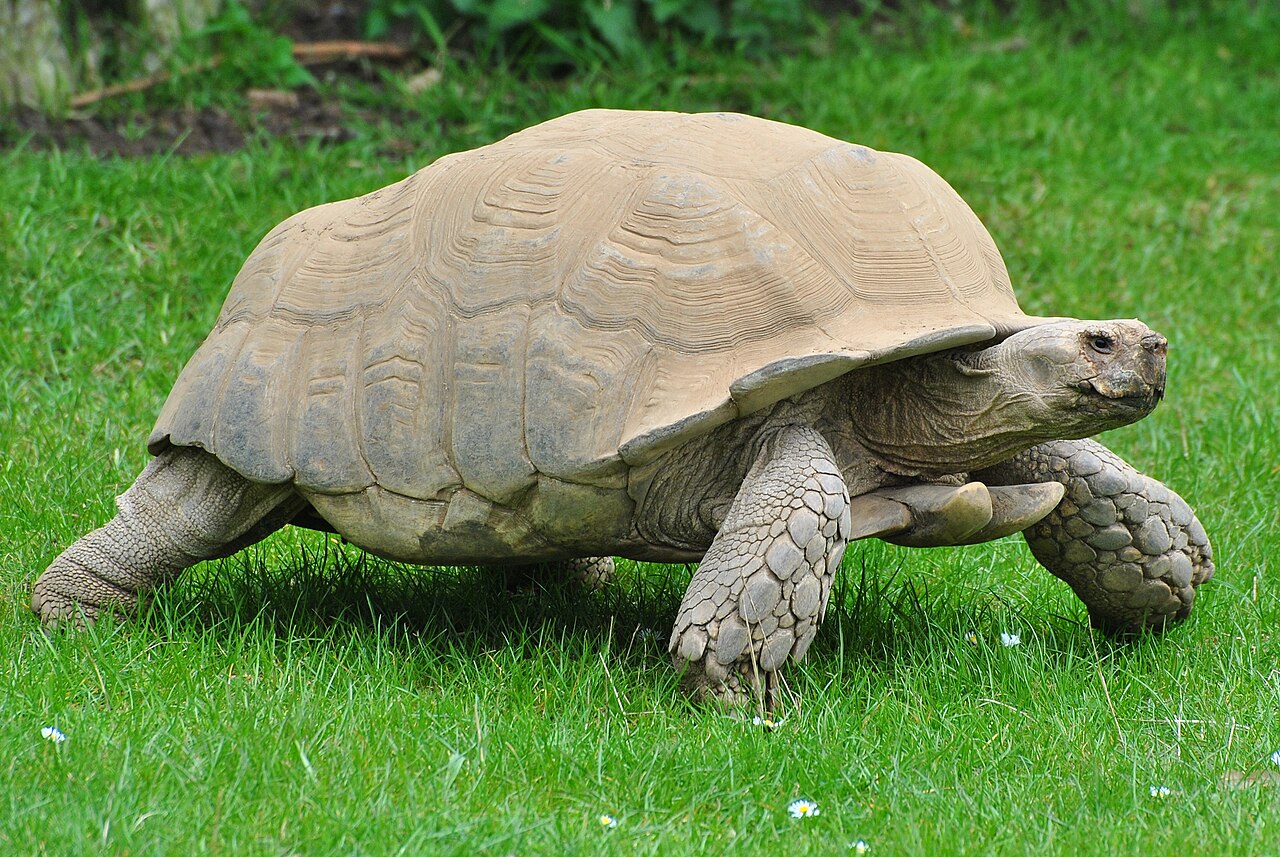 Wikimedia Commons
Sahel — Senegal, Mali, Chad, Sudan, Ethiopia
Size: 24–36" carapace, 70–200 lb
Third-largest tortoise on Earth. Grassland grazer, prolific burrower. Wildly under-estimated as pets — adults need outdoor space and a heated shed.
Learn more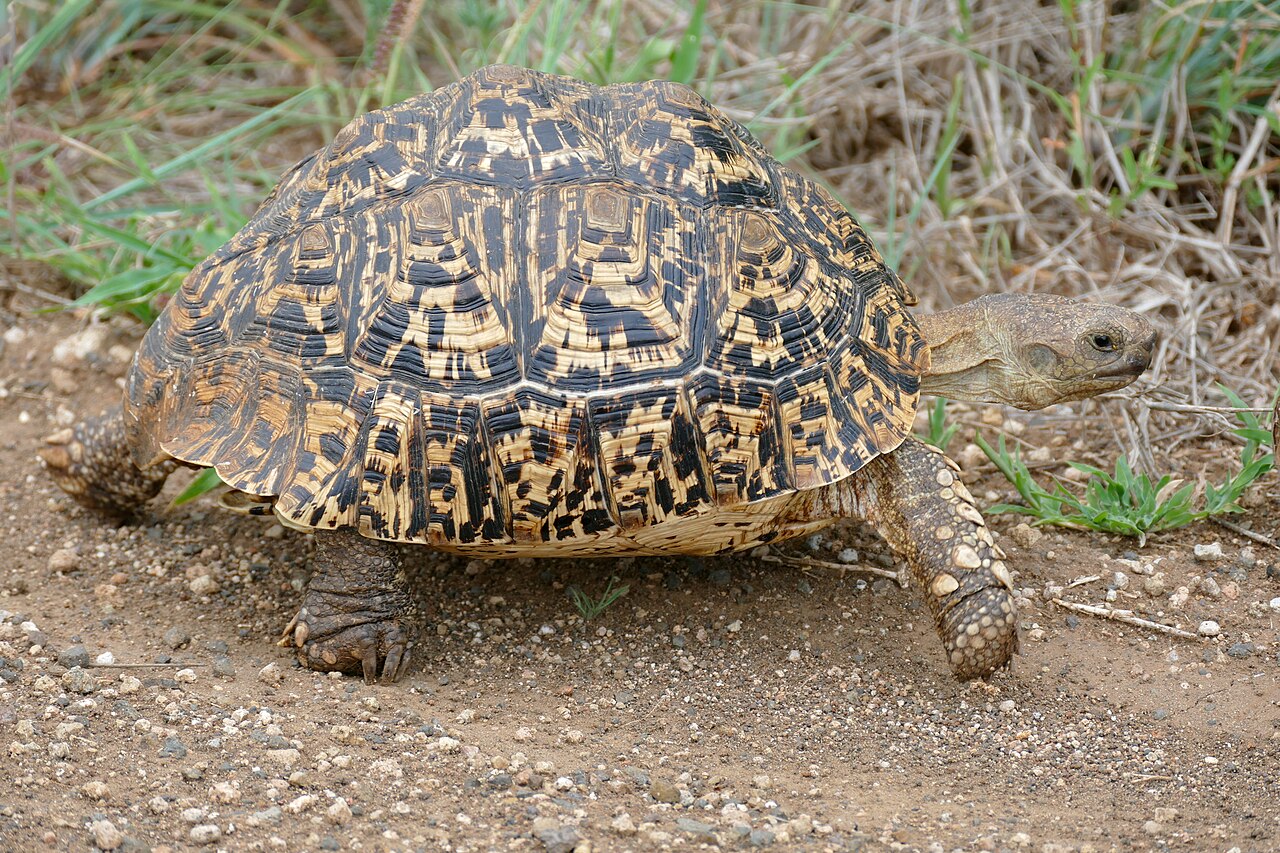 Wikimedia Commons
Eastern and southern Africa — savanna and dry scrub
Size: 16–18" carapace, 30–50 lb
Beautiful spotted shell. Pure grazer, no fruit. Does not dig burrows — needs surface shelter from heat and cold.
Learn more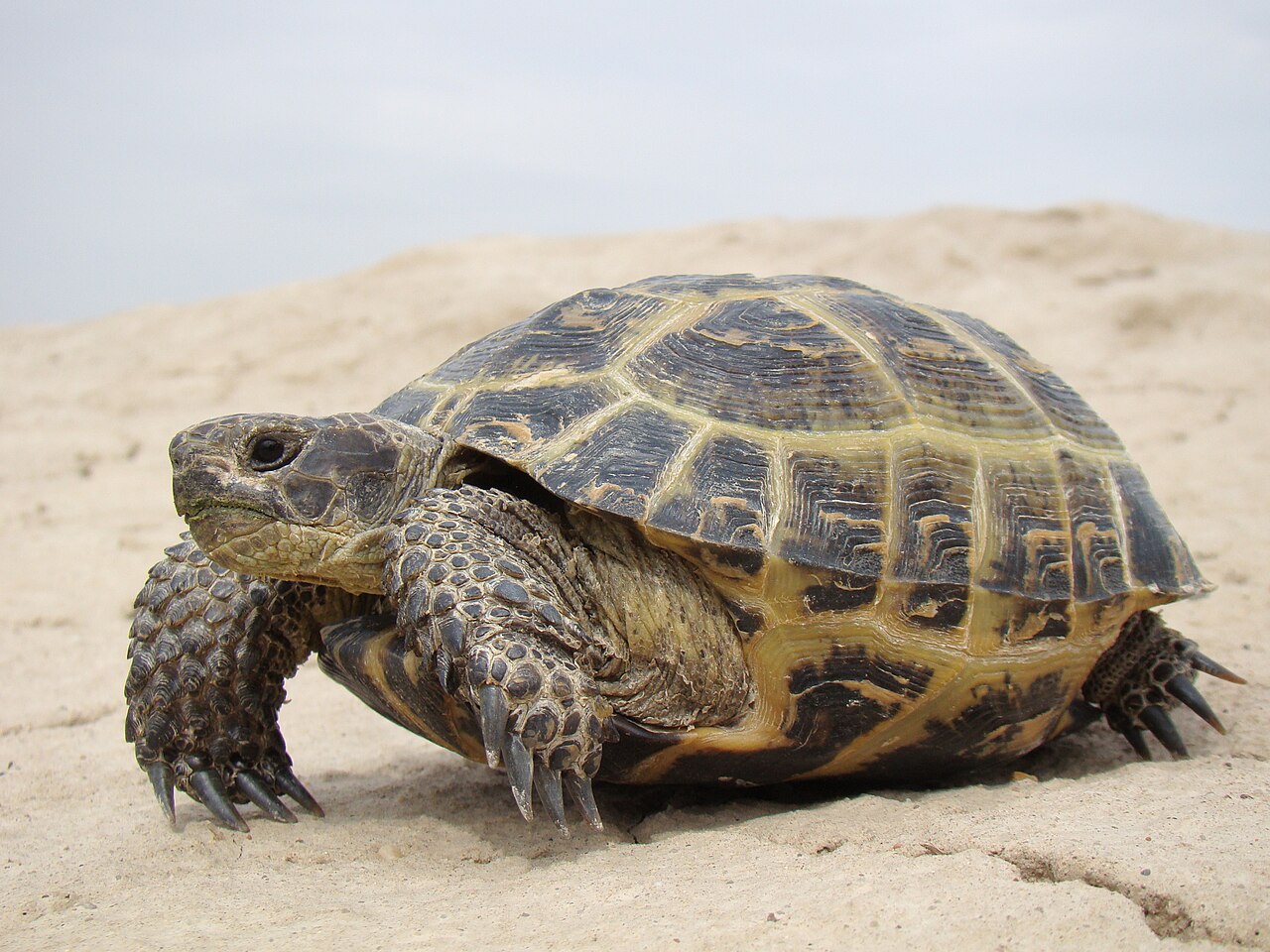 Wikimedia Commons
Central Asia — Afghanistan, Iran, Pakistan, Uzbekistan, Kazakhstan
Size: 6–10" carapace, 1–3 lb
Small, hardy, only four claws per foot. Built for short hot summers and long burrow brumation. Easiest "true" tortoise for cold climates.
Learn more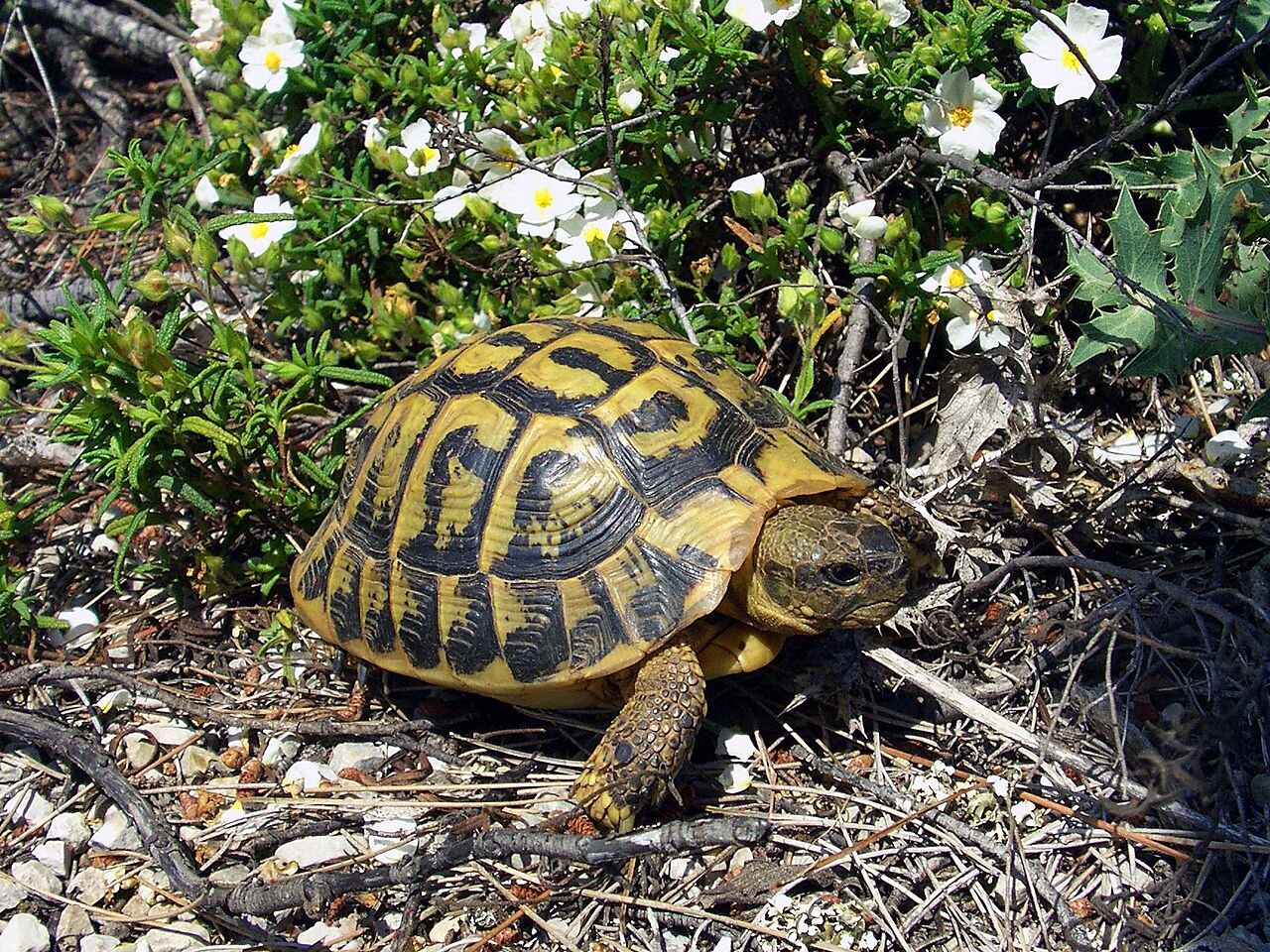 Wikimedia Commons
Mediterranean Europe — Italy, Spain, the Balkans, Greece
Size: 6–11" carapace, 4–8 lb
Classic European garden tortoise. Distinctive tail-tip spur. Brumates through winter. Long-lived — 50–100 years in good care.
Learn more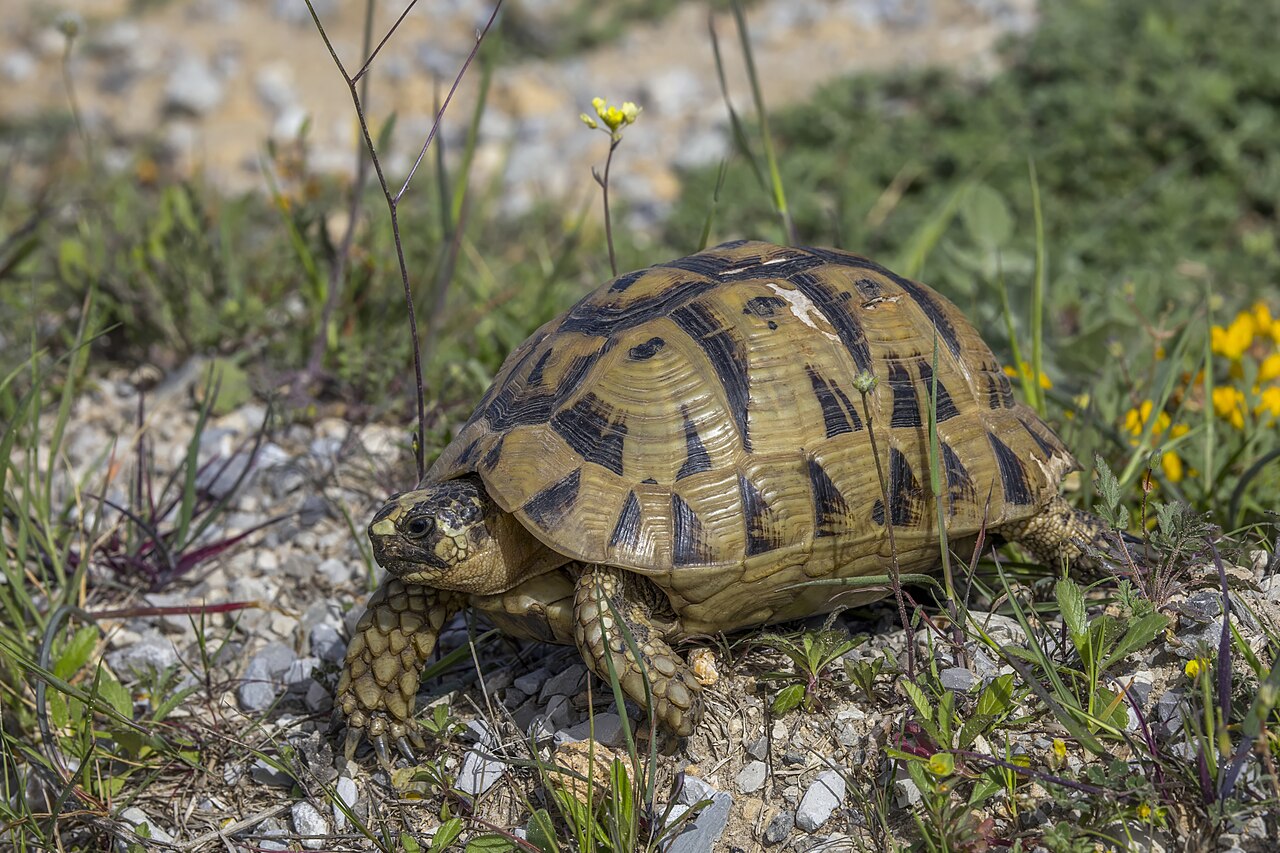 Wikimedia Commons
Mediterranean — North Africa, the Middle East, southern Europe
Size: 5–10" carapace, 2–7 lb
Named for the spurs on each thigh, not for Greece. Many subspecies across a huge range — varies wildly in size and color.
Learn more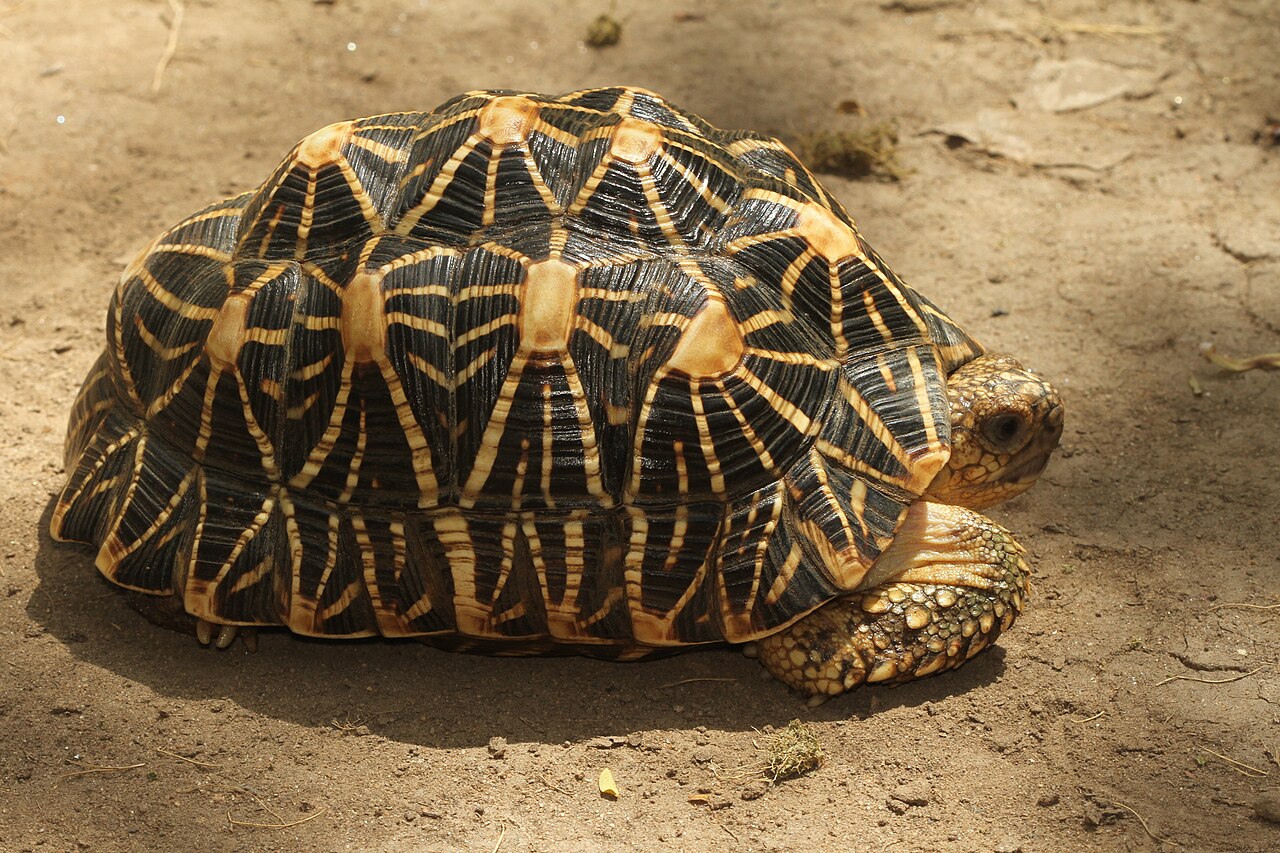 Wikimedia Commons
Dry scrub of India, Sri Lanka, and southeast Pakistan
Size: 7–12" carapace, 3–15 lb
Striking yellow starburst pattern on each scute. CITES Appendix I — heavily protected; legal captive lines only.
Learn more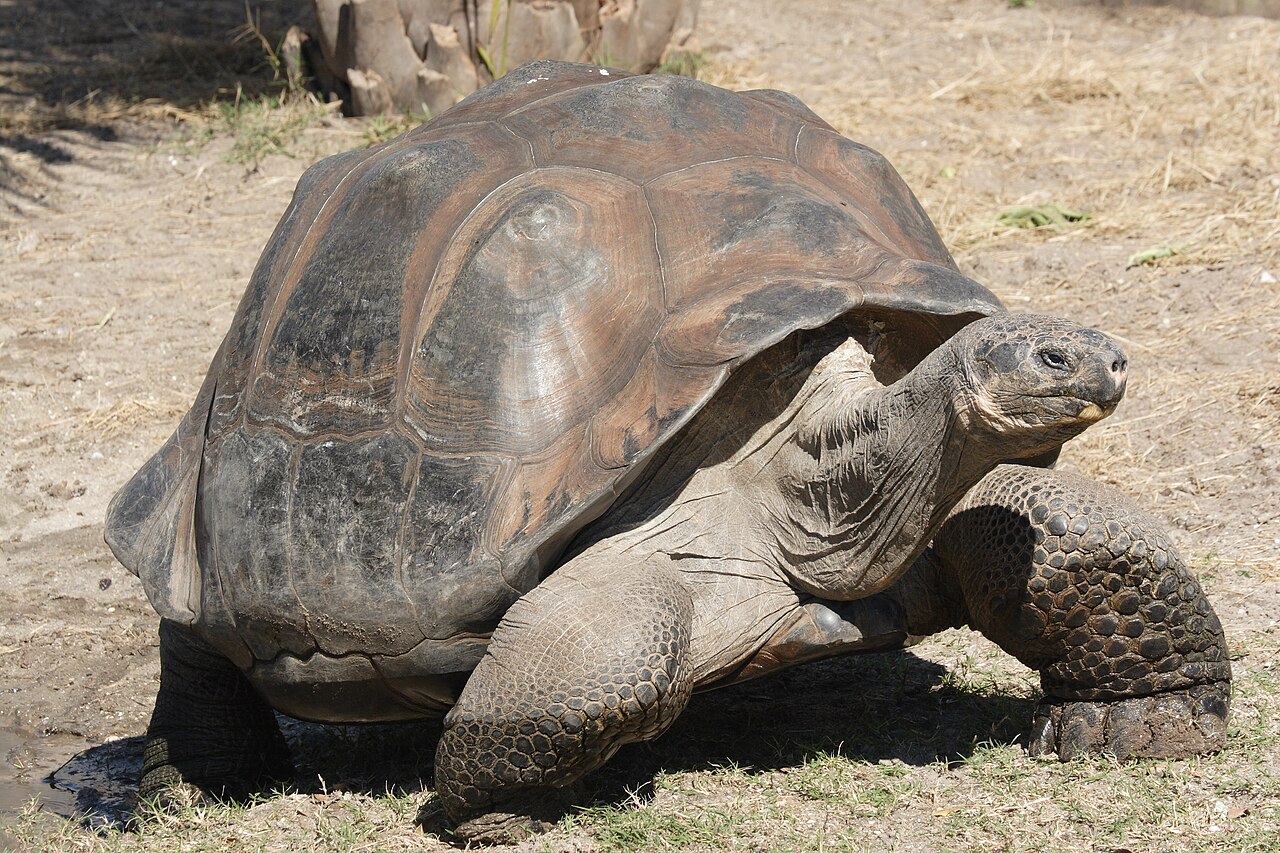 Wikimedia Commons
Galápagos Islands, Ecuador
Size: Up to 60" carapace, 500–900 lb
Largest living tortoise. Multiple island-specific subspecies with saddleback or domed shells matched to their food height. Can live 150+ years.
Learn more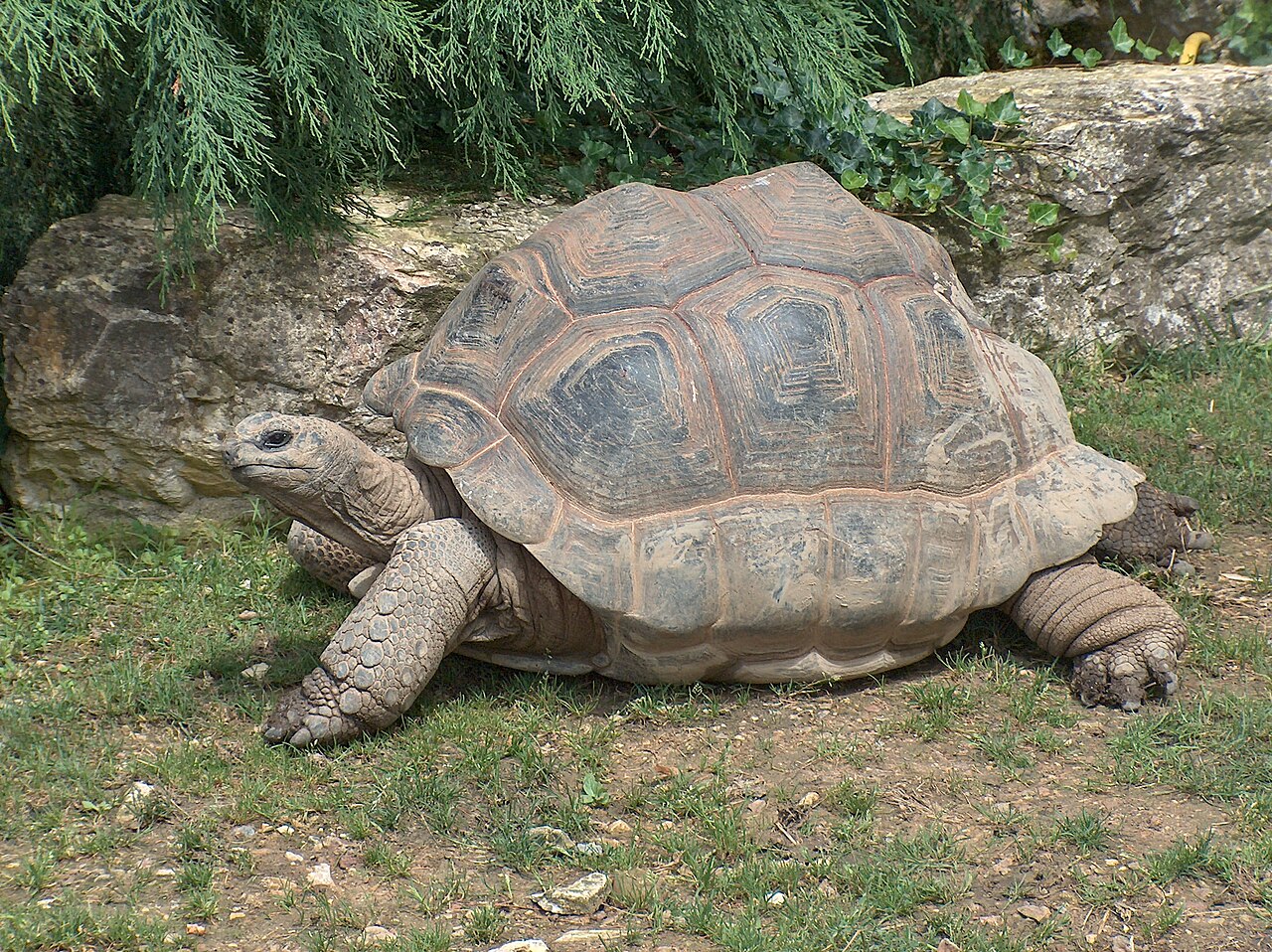 Wikimedia Commons
Aldabra Atoll, Seychelles
Size: Up to 48" carapace, 500–700 lb
The other living giant. Almost wiped out in the 1800s; one of conservation's earliest comeback stories.
Learn more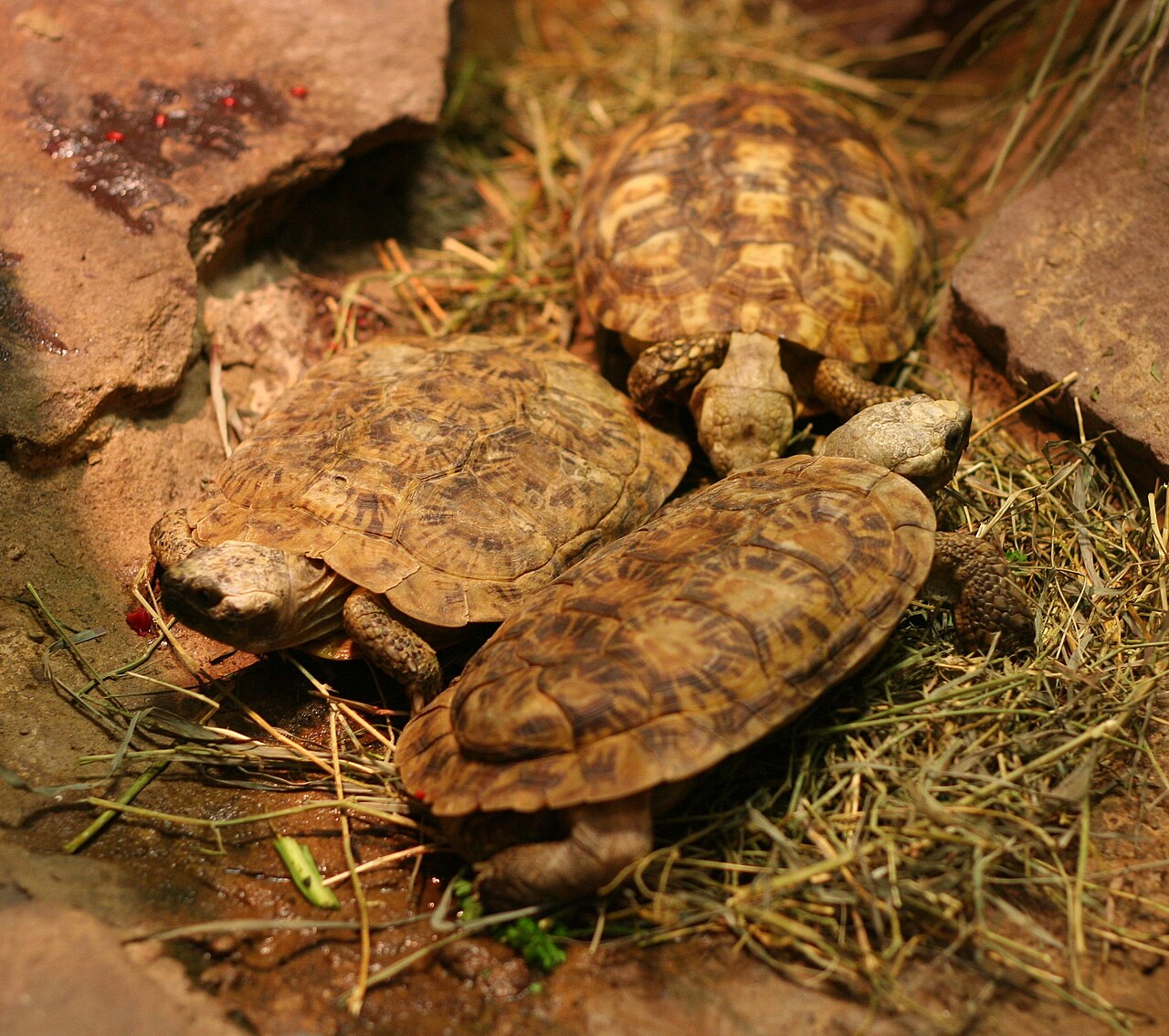 Wikimedia Commons
Rocky outcrops of Kenya and Tanzania
Size: 6–7" carapace, under 1 lb
Flat, flexible shell — it wedges into rock cracks and inflates itself with air so predators can't pull it out. Endangered.
Learn more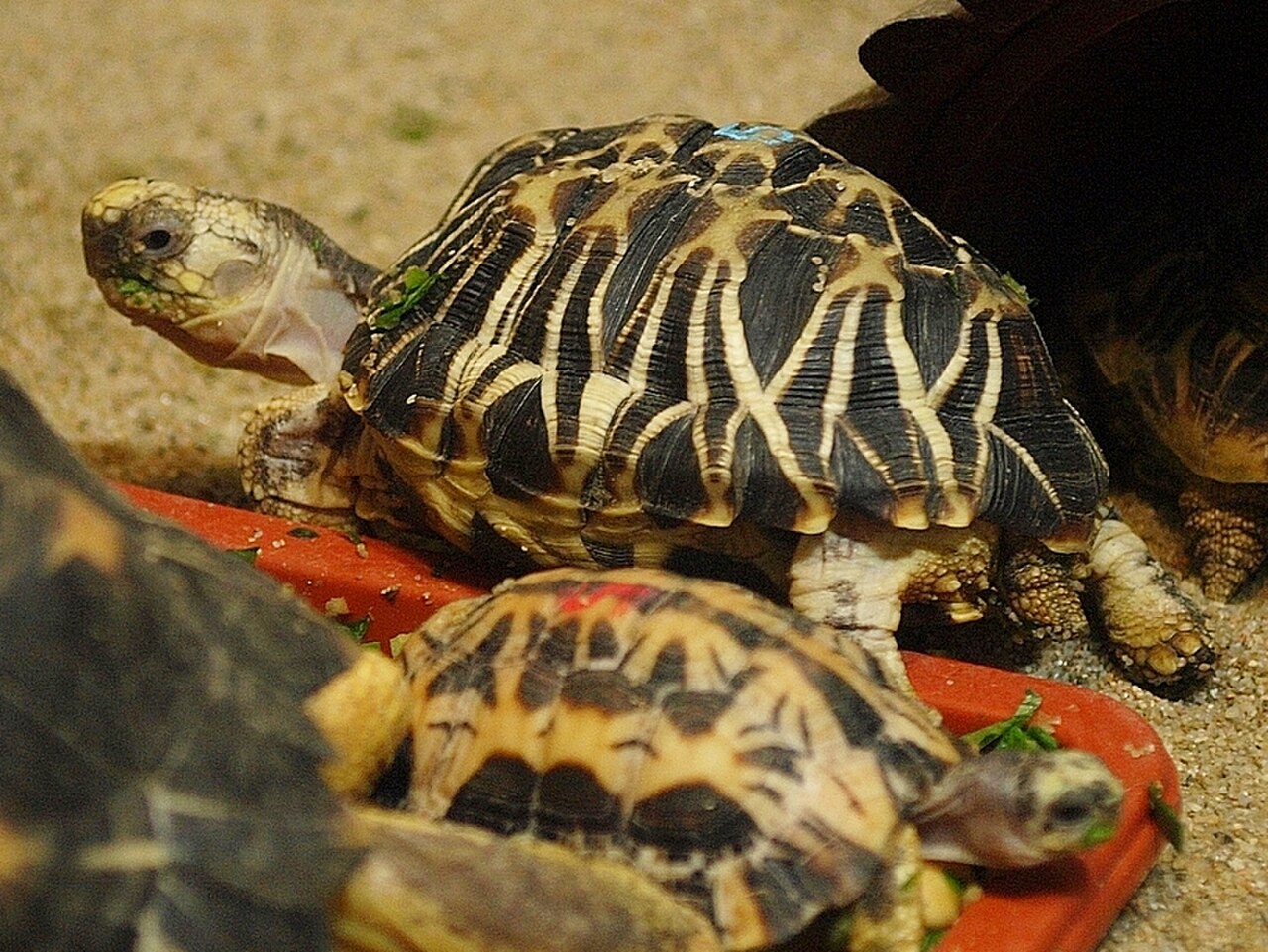 Wikimedia Commons
Dry zone of central Myanmar
Size: 10–14" carapace, 10–25 lb
Functionally extinct in the wild by 2000; rebuilt from a few dozen captive animals — one of the most successful tortoise recoveries ever.
Learn moreA tortoise's underside is called the plastron. It's the second half of the shell — fused to the upper dome (the carapace) by a bony bridge on each side. The plastron is made of paired scutes, and once you can name them, sexing and health checks get a lot easier. Tap a region to inspect it.
The largest pair — middle of the belly. Where you'll see the male's concave dish most clearly.
A tortoise's shell is a living record of how it's been kept. Growth rate, humidity, diet, lighting, and injury all leave marks. Tap a concept to see it on the shell.
The concentric ridges inside each scute are growth bands — new keratin laid down as the tortoise grows. They're not annual like tree rings: a fast-growing hatchling can lay down several in a year, an adult might add almost none. Wide, evenly spaced rings = steady growth. Cramped, irregular rings = stop-start growth (often diet or temperature swings).
None of this replaces a reptile vet. Use it to know when something looks off, then get a professional opinion — especially for shell rot, MBD, or any crack.